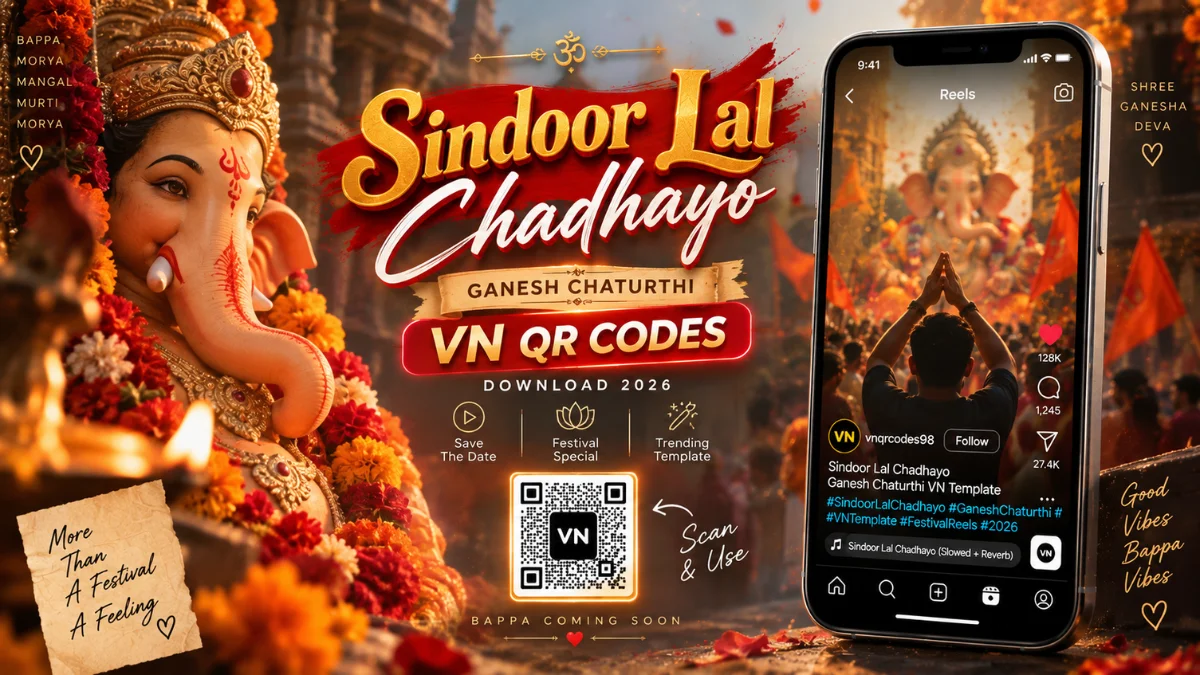
Mercedes Car AI Video Editing Prompt 2026 | Google Flow Viral Trend
ADVERTISEMENT
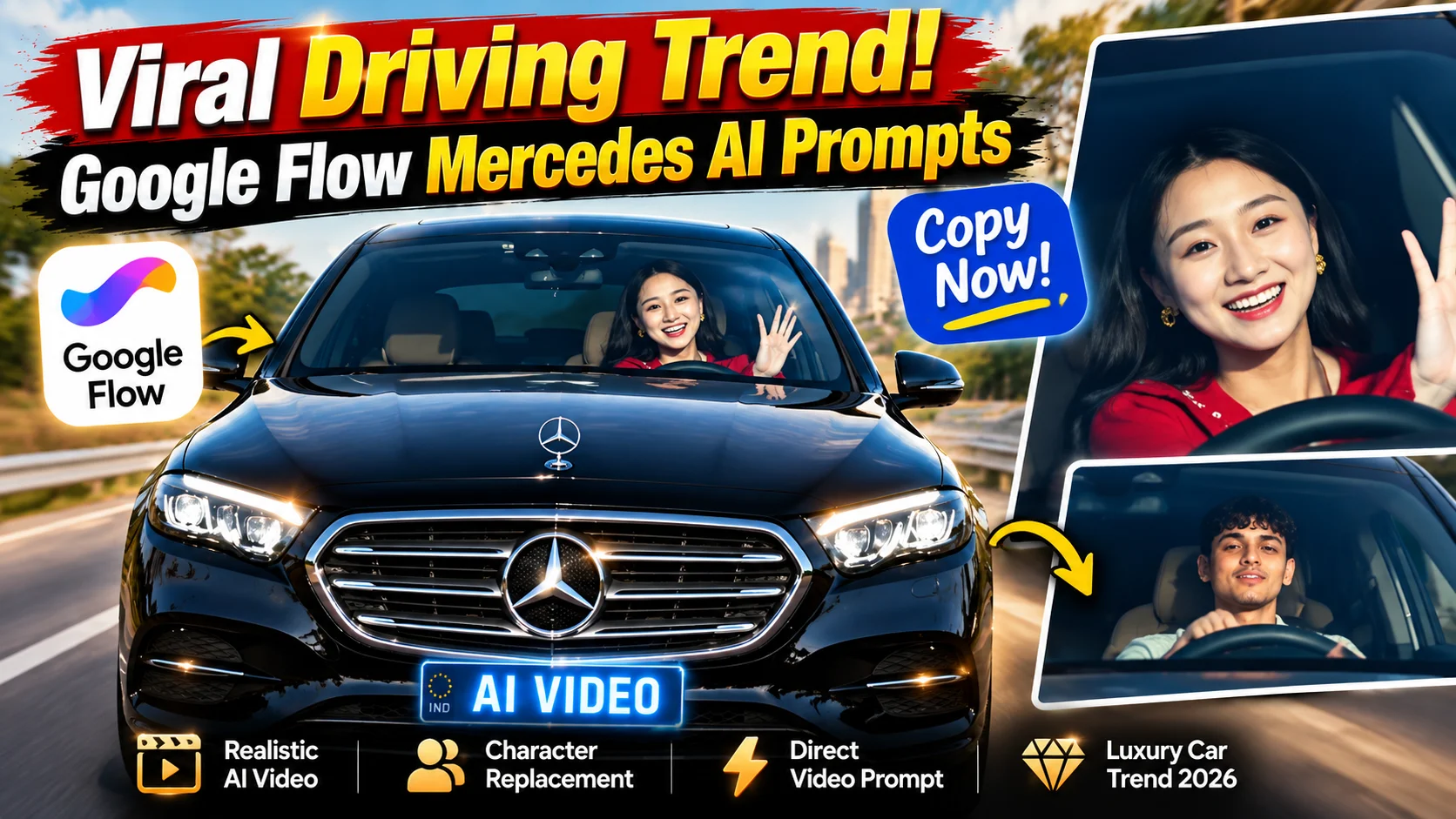
If you are scrolling through Instagram Reels or YouTube Shorts, you have definitely seen the viral Mercedes car AI video editing trend dominating the feeds. In this trend, creators are seen actively driving a sleek luxury black Mercedes-Benz with the camera mounted directly on the front hood, capturing natural wind movement, steering action, and genuine lifestyle smiles through the windshield. Instead of requiring an expensive luxury vehicle or complex automotive camera rigs, advanced generative platforms like Google Flow make it effortless to place your real face behind the wheel of a moving Mercedes. Today on vnqrcodes.in, we are sharing the complete step-by-step workflow along with the exact viral prompts—both for instant character face replacement and direct text-to-video generation.
The magic of this viral car video editing setup lies in maintaining physical consistency. By utilizing a specialized vn template code or running Google Flow's reference-video workflows, you can preserve the car's interior, road reflections, steering wheel motion, and camera angles while naturally swapping the driver with your own uploaded photograph. Below, you will find both verified prompt formulas ready to copy and paste directly into Google Flow.
1. Character Replacement & Image Generation Prompt (Create Your Driver Photo)
Before creating the video, you first need a realistic image of yourself sitting in the driver's seat of the Mercedes-Benz. Download our reference image below to maintain the exact lighting, angle, and car interior.
See How Your Video Looks After Editing! 👇

📲 Download Reference Image: Long press (tap & hold) on the reference image above to save it directly to your gallery.
Once you have saved the reference image, upload both your photo and the reference image into your AI image generator (like ChatGPT or Google Gemini) using this prompt:
AI PROMPT
Replace the driver in the reference image with the person from my uploaded photo. The uploaded person should naturally occupy exactly the same position and posture as the original driver. Keep everything else exactly unchanged: the same luxury black Mercedes car interior, steering wheel, road view through the windshield, lighting, camera angle, shadows, reflections, and overall photorealistic aesthetic. Maintain the person's exact face, hairstyle, skin tone, and natural expression.
ADVERTISEMENT
2. Direct Video Prompt for Google Flow (Turn Your Image into Moving Video)
Once your realistic Mercedes driver image is generated from Step 1, open Google Flow. Upload your newly generated driver image as the primary visual reference, select horizontal (16:9) or vertical (9:16) format, and paste this video prompt:
AI PROMPT
Create an ultra-realistic REAL-WORLD CAMERA VIDEO, not an AI-looking or CGI-looking video. Use TWO uploaded references: REFERENCE VIDEO: This controls the exact car, car movement, camera movement, camera angle, framing, timing, scene transition, environment, lighting, actions and overall visual composition. CHARACTER IMAGE: This controls the exact identity and appearance of the person. The final result must look like an actual real camera recording of a real person inside a real physical Mercedes-Benz car. IMPORTANT — DO NOT GENERATE A 3D RENDER: The car must NOT look computer-generated, game-engine rendered, 3D modeled or digitally reconstructed. The person must NOT look AI-generated, plastic, overly smooth, beautified or digitally composited. Everything must have the small imperfections and optical characteristics of genuine real-world camera footage. REAL CAMERA LOOK: Use physically believable camera optics and real-world photography characteristics. Natural exposure. Natural dynamic range. Natural highlight roll-off. Realistic motion blur. Realistic shutter motion. Natural depth of field. Natural lens distortion. Natural focus transition. Realistic sensor noise/grain at a very subtle level. Natural skin texture. Natural micro-contrast. Realistic reflections. Realistic shadows. Realistic ambient light. Do NOT make the image excessively sharp, glossy, HDR, oversaturated or digitally perfect. Avoid the typical AI-generated “perfect image” appearance. REAL HUMAN: The uploaded person must look like a real human being physically present inside the car. Preserve the exact identity from the uploaded image: same face shape, same eyes, same eyebrows, same nose, same lips, same jawline, same skin tone, same hairstyle, same facial hair, same age, same natural facial proportions. Preserve realistic skin pores, tiny skin imperfections, natural facial asymmetry and realistic skin texture. Do not smooth the skin. Do not beautify. Do not reshape the jaw. Do not enlarge the eyes. Do not change the nose. Do not modify the lips. Do not make the face symmetrical. Do not make the person look like an AI model. The person’s face must remain stable throughout the entire video. REAL EYES AND FACE: Eyes must have realistic wetness, reflections and natural blinking. Facial expressions must be produced through subtle realistic facial muscle movement. No frozen expression. No rubber-like facial movement. No face warping. No identity drift. REAL HAIR: Individual hair strands should behave naturally. Hair must respond naturally to head movement and airflow. Do not create painted or plastic-looking hair. REAL HANDS: Hands must have physically correct anatomy. Five fingers on each hand. Natural finger joints. Natural skin texture. Realistic fingernails. Correct hand proportions. Natural wrist movement. No extra fingers. No fused fingers. No malformed palms. No disappearing fingers. REAL MERCEDES: The black Mercedes-Benz must look like an actual photographed physical vehicle. Preserve realistic: metallic black paint, clear-coat reflections, chrome grille, Mercedes emblem, LED headlights, windshield glass, side mirrors, body panels, panel gaps, rubber seals, tires, dashboard, steering wheel, leather seats, interior materials. The paint must reflect the real surrounding environment naturally. Do NOT make the bodywork look like a smooth CGI model. Do NOT create impossible reflections. The windshield must behave like real glass: realistic transparency, realistic reflections, subtle tint, correct refraction, natural highlights and glare. CAR MOVEMENT: Recreate the exact vehicle movement from the uploaded reference video. When the car approaches the camera, its apparent size must increase because of REAL PHYSICAL MOVEMENT through space — NOT because of a digital zoom. The grille, headlights, hood and windshield must naturally become larger in the frame as the vehicle approaches. Perspective must change naturally according to the changing distance between the real camera and the real car. Maintain realistic wheel/body motion and natural vehicle movement. Do not make the car slide. Do not make the car float. Do not make the car move like a 3D animation. CAMERA: Reproduce the reference video’s camera position and movement exactly. The camera must behave like a real handheld or mounted camera physically positioned in the real environment. Match: camera height, camera distance, lens perspective, field of view, framing, camera movement, camera speed, camera acceleration/deceleration, focus behavior, motion blur, and timing. Do not invent camera movements. Do not use artificial digital zoom to imitate physical camera movement. Do not orbit around the car unless the reference video does so. Do not create drone-like movement unless present in the reference. SCENE 1 — EXTERIOR: Recreate the opening exterior shot exactly from the reference video. The real black Mercedes approaches the camera. Maintain the same front-facing composition and camera position as the reference. As the vehicle comes closer, naturally reveal more detail in: grille, Mercedes emblem, headlights, hood, windshield and driver. The driver must remain physically inside the real vehicle. Realistic windshield reflections should partially interact with the driver’s face without completely hiding it. Maintain natural daylight and real environmental reflections. SCENE 2 — EXACT TRANSITION: At the same moment as the reference video, transition/cut to the interior shot. Do not invent a new transition. SCENE 3 — INTERIOR: Recreate the exact interior composition from the reference. The uploaded person sits naturally in the driver’s seat. Show the real steering wheel in the foreground. Show realistic dashboard materials and beige/cream leather interior. The person looks naturally toward the side, then toward the front/camera according to the reference. One hand remains naturally positioned on or around the steering wheel when appropriate. SCENE 4 — HUMAN MOVEMENT: Recreate the exact hand gesture, head movement, eye movement and smile from the reference video. Movement must be subtle and physically realistic. Natural blinking. Natural breathing. Natural shoulder movement. Natural head rotation. Natural facial muscle movement. SCENE 5 — FINAL EXPRESSION: Recreate the final expression and head position from the reference. The person gives a subtle natural smile. Do not exaggerate the expression. Keep the same face identity and realistic skin texture. LIGHTING: Match the real lighting conditions visible in the reference video. Use physically believable daylight. Light must naturally interact with: skin, hair, glass, metal, paint, chrome, dashboard, steering wheel and leather. Shadows must have realistic softness and direction. No artificial studio lighting. No excessive cinematic glow. No fake rim light. No neon lighting unless it exists in the reference. COLOR: Natural real-camera color science. Realistic skin tones. Realistic black car paint. Natural beige interior. Natural highlights and shadows. Avoid excessive saturation. Avoid excessive contrast. Avoid HDR appearance. Avoid Create a highly realistic 10-second cinematic video using the reference image/person as the exact identity reference.
IMPORTANT:
Preserve the person’s exact face, facial structure, skin tone, hairstyle, body proportions, outfit, and overall appearance throughout the entire video.
Do not change identity.
Use realistic human body-motion tracking and natural facial movement.
Maintain temporal consistency from frame to frame.
CAMERA / SCENE:
A young man is sitting naturally in the driver’s seat of a black luxury Mercedes sedan at night.
Camera is positioned outside/front of the car and gradually feels closer to the person through the windshield.
Interior is dimly lit with soft cool nighttime lighting.
The steering wheel remains visible in the foreground.
Realistic windshield reflections, subtle dashboard lighting, natural shadows and cinematic DSLR look.
No camera shake or unnatural warping.
BODY MOTION TRACKING – FOLLOW
THIS EXACT SEQUENCE:
0.0-1.2 seconds: The person is seated naturally behind the steering wheel.
Upper body relaxed and centered.
Both shoulders remain stable.
He looks toward the camera with a calm expression.
Very subtle breathing movement in chest and shoulders.
Natural blinking.
Hands remain in a believable driving position.
1.2-2.5 seconds:
He begins moving his upper body slightly toward the camera.
His head moves naturally with the torso.He starts smiling.
One hand gradually lifts away from the steering wheel. Track the hand from shoulder → elbow → wrist → fingers with correct human joint movement.
No floating or disconnected fingers. 2.5-3.8 seconds:
He raises one hand beside his face and makes a casual two/three-finger gesture.
Elbow bends naturally.
Wrist rotates slightly.
Fingers move independently and realistically.
At the same time, he tilts his head slightly to one side.
His eyes remain directed toward the camera.
Expression becomes playful and confident.3.8-5.2 seconds:
He lowers the raised hand slightly. His smile becomes wider.
Natural cheek movement and subtle eye squint.
Head returns partially toward center.
Shoulders and neck follow the head movement naturally.
Keep the steering wheel and car interior fixed in
IMPORTANT:
Preserve the person’s exact face, facial structure, skin tone, hairstyle, body proportions, outfit, and overall appearance throughout the entire video.
Do not change identity.
Use realistic human body-motion tracking and natural facial movement.
Maintain temporal consistency from frame to frame.
CAMERA / SCENE:
A young man is sitting naturally in the driver’s seat of a black luxury Mercedes sedan at night.
Camera is positioned outside/front of the car and gradually feels closer to the person through the windshield.
Interior is dimly lit with soft cool nighttime lighting.
The steering wheel remains visible in the foreground.
Realistic windshield reflections, subtle dashboard lighting, natural shadows and cinematic DSLR look.
No camera shake or unnatural warping.
BODY MOTION TRACKING – FOLLOW
THIS EXACT SEQUENCE:
0.0-1.2 seconds: The person is seated naturally behind the steering wheel.
Upper body relaxed and centered.
Both shoulders remain stable.
He looks toward the camera with a calm expression.
Very subtle breathing movement in chest and shoulders.
Natural blinking.
Hands remain in a believable driving position.
1.2-2.5 seconds:
He begins moving his upper body slightly toward the camera.
His head moves naturally with the torso.He starts smiling.
One hand gradually lifts away from the steering wheel. Track the hand from shoulder → elbow → wrist → fingers with correct human joint movement.
No floating or disconnected fingers. 2.5-3.8 seconds:
He raises one hand beside his face and makes a casual two/three-finger gesture.
Elbow bends naturally.
Wrist rotates slightly.
Fingers move independently and realistically.
At the same time, he tilts his head slightly to one side.
His eyes remain directed toward the camera.
Expression becomes playful and confident.3.8-5.2 seconds:
He lowers the raised hand slightly. His smile becomes wider.
Natural cheek movement and subtle eye squint.
Head returns partially toward center.
Shoulders and neck follow the head movement naturally.
Keep the steering wheel and car interior fixed in
Step-by-Step Guide: How to Generate Your Mercedes AI Video
Follow this exact sequence in Google Flow so your final video looks completely natural without any face warping:
Step 1: Download the Reference Image & Create Driver Photo
Save the reference image provided above. Use our Character Replacement & Image Generation Prompt with your selfie to generate your base Mercedes driving photo.
Step 2: Open Google Flow Workspace
Open Google Flow on your desktop or mobile browser and launch the image-to-video generation canvas.
Step 3: Upload Your Generated Driver Image
Upload the generated photo (from Step 1) directly into Google Flow. This acts as the anchor frame, locking your facial identity, clothes, and car interior.
Step 4: Paste the Direct Video Prompt
Copy our Direct Video Prompt from above and paste it into Google Flow's prompt input box. This instructs the AI to animate realistic steering movements, road motion, and gentle windshield reflections.
Step 5: Select Aspect Ratio & Render
Choose 9:16 vertical for Instagram Reels and Shorts, or 16:9 widescreen for landscape displays. Click generate, review the driving motion, and download your 4K video reel.
Pro Editing Tips to Make It Viral on Instagram
Once you download your raw AI generation, you can elevate its performance with smooth post-processing:
Pair with Trending Audio: Sync your driving video with popular slowed-and-reverb music, trending Punjabi driving songs, or aesthetic lo-fi beats.
Add Subtle Shakes & Grain: Import your clip into VN Video Editor and apply a faint camera shake effect to simulate authentic road bumps.
One-Click Transitions with VN QR Codes: If you want to turn this into a before-and-after reel (showing your simple photo first, then dropping into the Mercedes driving video), scan any verified trending vn code from vnqrcodes.in to apply instant beat cuts and velocity curves.
Frequently Asked Questions (FAQs)
Q1. Are these Mercedes Car AI Video editing prompts free to use?
Yes, both the character replacement and direct generation prompts on vnqrcodes.in are completely free to copy and use across Google Flow.
Q2. Does Google Flow support character face replacement for car videos?
Yes, Google Flow's advanced visual reference model allows you to map your real face and posture onto the driver in a reference driving clip with high realism.
Q3. How do I ensure my face matches the driver realistically?
Always provide a high-resolution, unedited portrait with neutral lighting so Google Flow can cleanly map your facial features, skin tone, and hair texture onto the driver.
Q4. Can I edit and color-grade the generated video in the VN app?
Yes, simply import your generated MP4 into VN Video Editor, adjust contrast and warmth, or scan a free vn qr code download from our site to apply cinematic LUTs.
Conclusion
If you want to ride the wave of viral automotive reels on social media without spending on expensive camera equipment or rentals, this Mercedes-Benz AI driving setup in Google Flow is the perfect solution. Simply copy the prompt, generate your personalized video clip, and post your viral creation. For more trending reel setups, velocity curves, and transition templates, explore our complete VN QR Code Template List and visit the Viral VN Codes collection daily!
ADVERTISEMENT


🔥 Trending for You
Happy Birthday Bestie Collage VN QR Codes Free Download
Aayene Me Dekho Zara Khud Ko VN QR Codes Download
Tere Ki Lagde Punjabi Song VN QR Codes Download
Soneya Tere Haathon Mein VN QR Codes Download
Night Petrol Pump Chatgpt AI Photo Prompt 2026 | Viral Instagram Trend!